Research output leveraging the GMbC resources
This page presents selected publications that arise from our research activities, projects, and collaborations. These works document the scientific, methodological, and ethical dimensions of our efforts to collect, conserve, and study global human microbiome diversity. As our portfolio of work continues to expand, this page will be updated to include additional peer-reviewed articles, reports, and other scholarly contributions.
Peer-reviewed publications
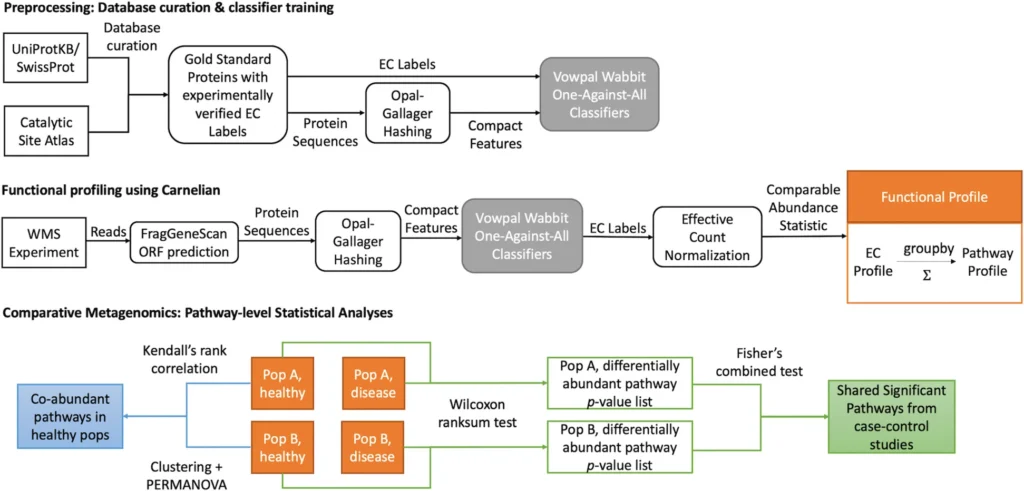
Carnelian uncovers hidden functional patterns across diverse study populations from whole metagenome sequencing reads
Microbial populations exhibit functional changes in response to different ambient environments. Although whole metagenome sequencing promises enough raw data to study those changes, existing tools are limited in their ability to directly compare microbial metabolic function across samples and studies. We introduce Carnelian, an end-to-end pipeline for metabolic functional profiling uniquely suited to finding functional trends across diverse datasets. Carnelian is able to find shared metabolic pathways, concordant functional dysbioses, and distinguish Enzyme Commission (EC) terms missed by existing methodologies. We demonstrate Carnelian’s effectiveness on type 2 diabetes, Crohn’s disease, Parkinson’s disease, and industrialized and non-industrialized gut microbiome cohorts.
Policy in practice: How to “do” the Nagoya Protocol: common misconceptions, challenges and best practices for access and benefit-sharing compliance
The Nagoya Protocol establishes an international framework for access and benefit-sharing that also applies to microbial research. However, many microbiologists remain uncertain about its requirements and how to comply with them, despite the potential legal and reputational consequences of non-compliance. This paper addresses common misconceptions, outlines practical challenges, and provides a step-by-step guide to navigating the Nagoya Protocol, supported by case studies and best-practice principles for equitable and responsible research.
Policy Briefing: from access to use—untangling the international legal frameworks that govern microbial resources
Microorganisms are globally distributed and remarkably diverse, providing essential genetic resources that underpin ecosystem resilience and biotechnological innovation. Yet accessing and using this diversity requires navigating a complex and rapidly evolving regulatory landscape shaped by international treaties, access and benefit-sharing frameworks, and sector-specific rules. This policy briefing offers a concise, graphical guide to help both practitioners and policymakers better understand and navigate this complexity.
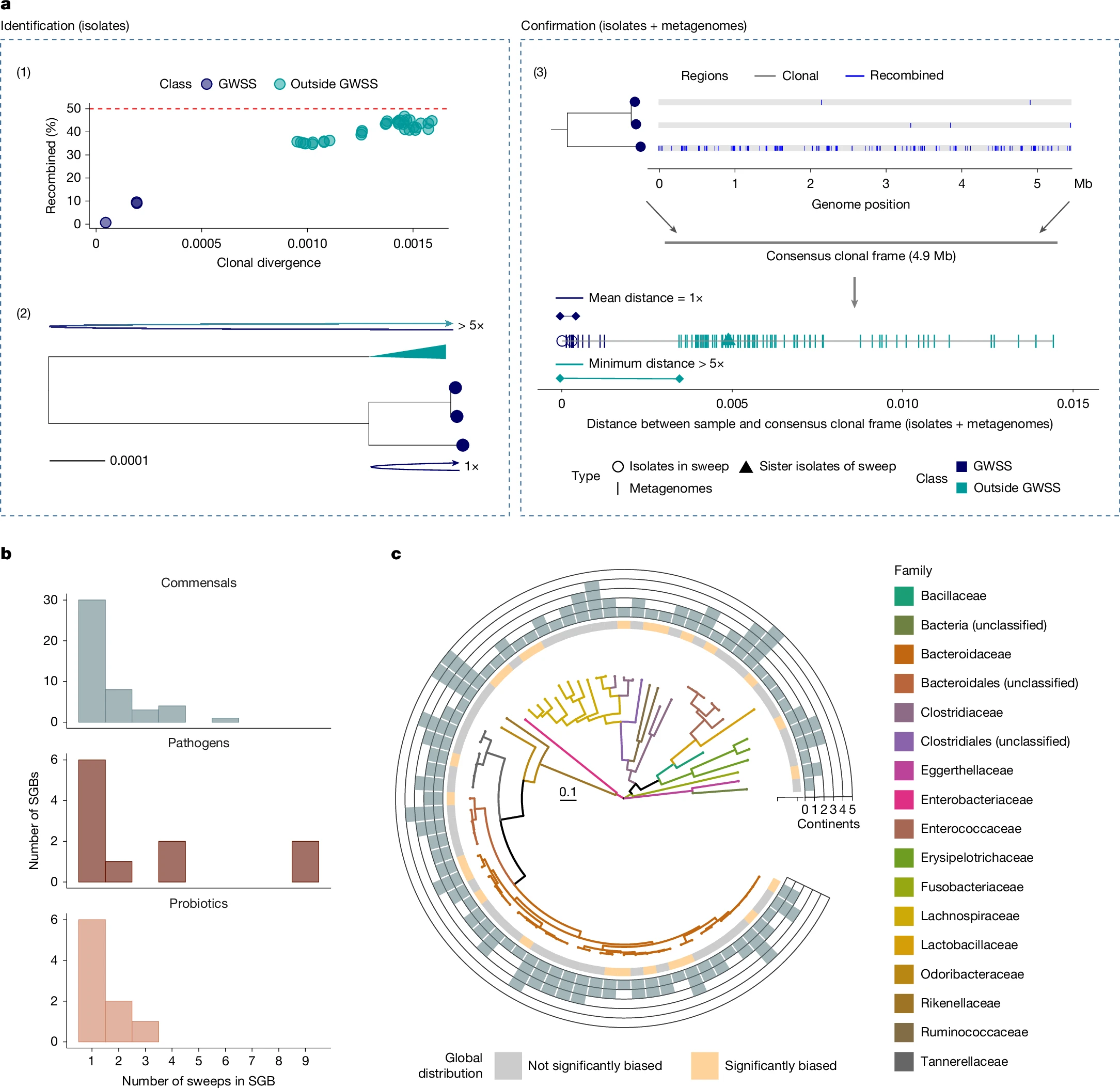
Genome-wide sweeps create ecological units in the human gut microbiome
This study shows that “genome-wide selective sweeps” are a widespread evolutionary force shaping bacteria in the human gut microbiome, creating distinct ecological populations that can spread globally within decades using GMbC data. By analyzing thousands of bacterial genomes and metagenomes, the authors found that these microbial populations are associated with specific host conditions—including colorectal cancer, inflammatory bowel disease, type 2 diabetes, and aging—suggesting that evolution within the microbiome plays a key role in human health and disease.
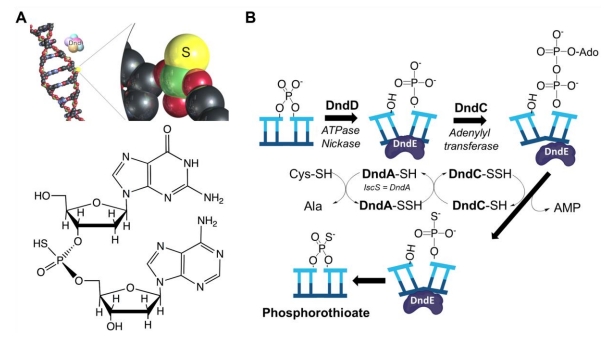
Phosphorothioate DNA modification by BREX Type 4 systems in the human gut microbiome.
Using large-scale genome collections from the human gut microbiome, this study uncovers widespread phosphorothioate DNA modifications and identifies a new BREX Type 4 epigenetic system. The findings highlight the human gut microbiome as a rich reservoir of previously uncharacterized microbial epigenetic diversity.
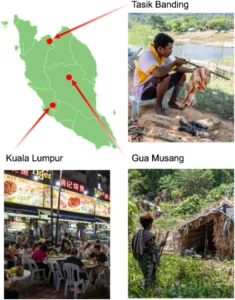
Gut microbiota profiles of peninsular Malaysian populations are associated with urbanization and lifestyle.
Leveraging a dataset from Peninsular Malaysia, this study demonstrates clear stratification in gut microbial community structure, diversity, and composition along a rural–urban gradient. The findings underscore how lifestyle and environmental context shape human gut microbiomes across populations.
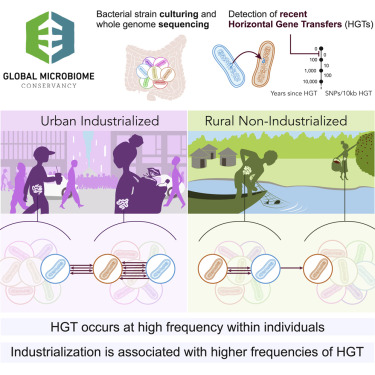
Elevated rates of horizontal gene transfer in the industrialized human microbiome.
This study shows that gut bacteria from industrialized populations exhibit elevated rates of horizontal gene transfer compared with those from non-industrialized contexts. The findings suggest that industrialization-related environmental and lifestyle factors can reshape microbial genetic exchange and functional potential in the gut microbiome.
Pre-prints
Industrialization drives convergent microbial and physiological shifts in the human metaorganism.
This preprint presents a global, multimodal analysis of the GMbC cohort to disentangle the effects of industrialization, diet, lifestyle, and host genetics on the human gut microbiome. The study shows that industrialized lifestyles are associated with reduced microbial diversity and stability, altered immune–microbiome interactions, and limited cross-population transferability of microbiome-based disease predictors.
Convergent genomic responses of human gut bacteria to variations in industrialization.
Using comparative analysis of human gut microbiome genomes, this preprint identifies population- and environment-associated patterns in microbial genetic diversity and function. The results contribute to a broader understanding of how human lifestyle and ecology influence the structure and evolution of gut microbial communities.
Unless otherwise noted, publications listed here are authored or co-authored by GMbC researchers and collaborators. Please refer to the original publishers for citation, reuse, and access terms.