Advancing global microbiome science requires collaborative efforts, access to the latest scientific advancements, and high-quality bioinformatics and computational training for researchers worldwide. However, early-career scientists and researchers from low- and middle-income countries (LMICs) often face barriers that limit their networking opportunities and participation in international conferences and training programs because of financial constraints, limited IT infrastructure, and resource shortage.
To address these challenges, the Global Microbiome Conservancy offers capacity-building programs focused on both experimental and computational aspects of microbiome research.
Experimental training
We provide essential microbiology and molecular biology protocols for microbiome data generation. Our programs are designed to equip researchers with the practical skills needed to produce high-quality data. Key components of our experimental capacity-building include:
- Step-by-step guidance on sample collection, processing, DNA extraction, library preparation, and sequencing protocols.
- Assistance with procuring essential laboratory equipment to support on-site microbiome research.
- Customised training sessions tailored to specific needs and research priorities.
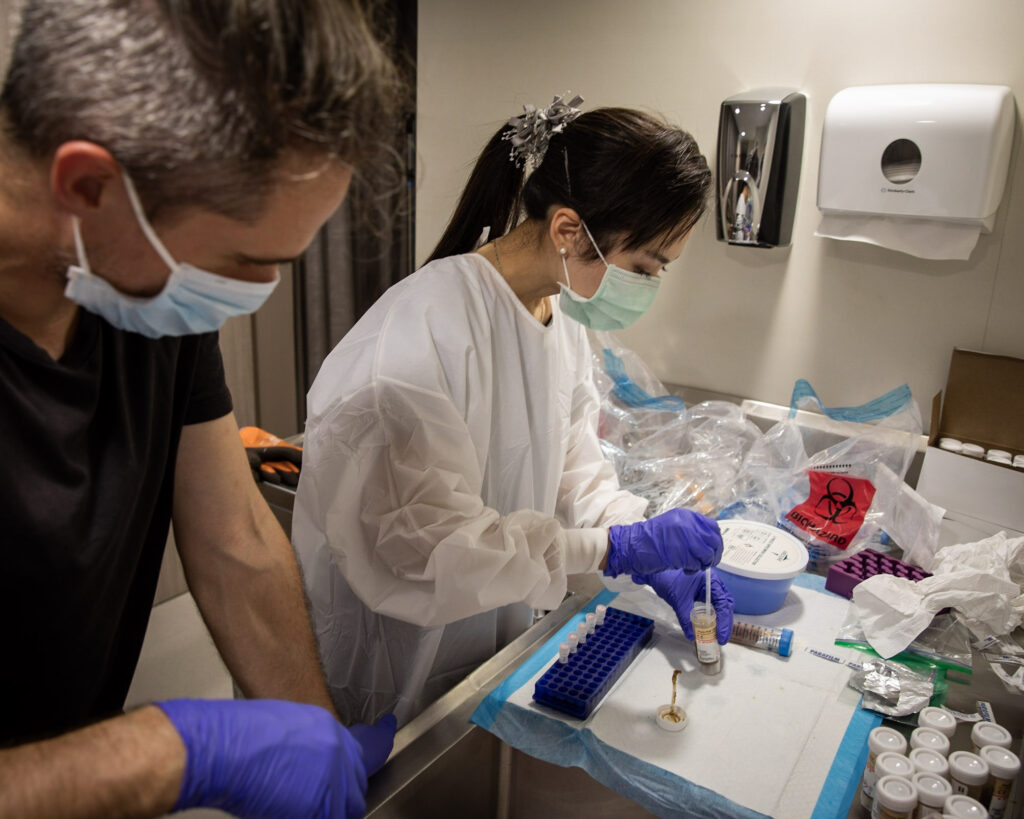
@ Global Microbiome Conservancy
Computational workshops and training
We offer in-person or virtual computational workshops to empower researchers with the skills necessary to analyze and interpret microbiome data. Our programs cover a range of computational tools and techniques, including:
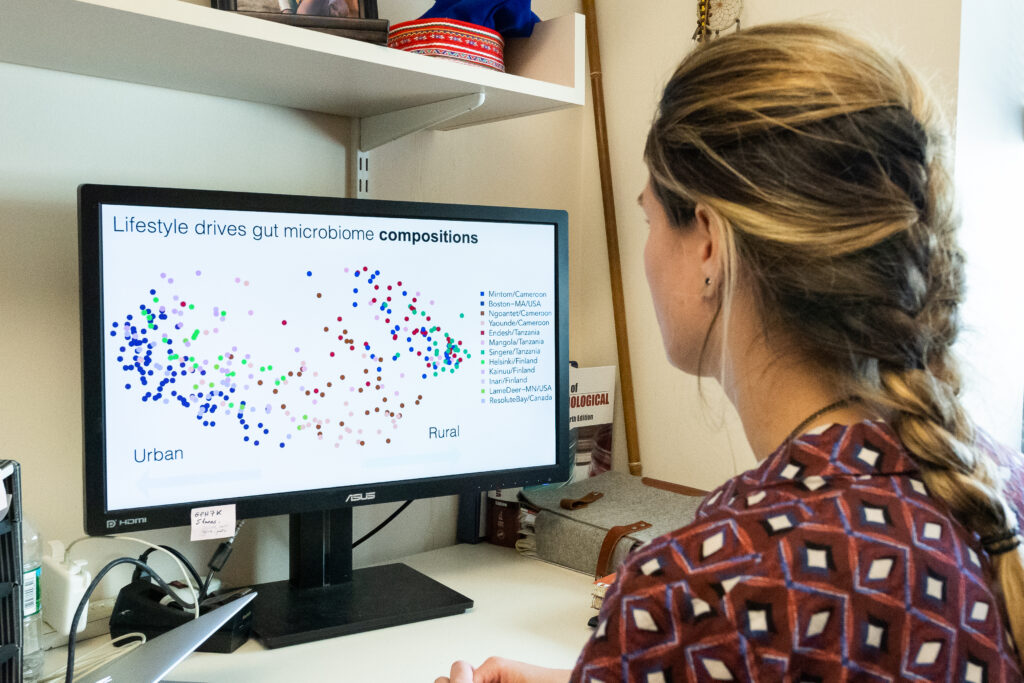
@ Global Microbiome Conservancy
- Instruction in data processing, quality control, taxonomic profiling, and statistical analysis.
- Training on the use of publicly available software and databases for microbiome data analysis.
- Guidance on visualizing and interpreting complex microbiome datasets.
A recent example of this activity is the two-day bioinformatics workshop hosted by the Kiel Microbiome Center in 2024 (with financial support from NFDI4Microbiota, etc), using GMbC microbiome datasets for hands-on training in analysis and visualization. Teaching material from this workshop can be found at here.
Kiel Microbiome Club (ECR initiative)
The Kiel Microbiome Club is an early-career researcher initiative of the Kiel Metaorganism Center (KMC) within Kiel Life Science (KLS). Founded by members of the Groussin and Poyet research group, the club provides an open, international platform where early-career researchers interested in microbiome science can connect, exchange ideas, and develop new collaborations.
Unlike many local seminar series, the Kiel Microbiome Club is designed to be accessible worldwide. All meetings are held online via Zoom, allowing researchers to participate regardless of their institution or location. We particularly welcome participants from the Global Microbiome Conservancy (GMbC) network and partner institutions, while remaining open to anyone with an interest in microbiome research.
Our meetings are organized by early-career researchers, for early-career researchers, creating a supportive environment in which participants can present their work, discuss new ideas, receive constructive feedback, and build professional networks across disciplines and countries.
Our mission:
We aim to:
- Connect early-career researchers working in microbiome science across institutions and countries,
- Foster scientific exchange in a supportive peer-to-peer environment,
- Provide opportunities to present research and receive constructive feedback,
- Offer practical workshops and career-development activities tailored to the needs of early-career researchers,
- Encourage new collaborations within Kiel and across the international microbiome community.
The club is open to all early-career researchers interested in microbiome science, including undergraduate and Master’s students, PhD candidates, postdoctoral researchers, and recent graduates. Participation is free of charge, and no affiliation with Kiel University is required.
Join now!
Membership is free throughout the year. Registered members receive announcements, Zoom links, and updates about upcoming events.
Complete the registration form:
forms.gle/nG8Nip5LGU4wU1KE7
Events:
The Kiel Microbiome Club is regularly organizings meetings every two months, alternating between scientific presentations, practical workshops, and networking events. All are held online via Zoom and conducted in English.
Seminars
As part of our commitment to building scientific community and supporting collaborative exchange, the GMbC co-hosts a bi-monthly online seminar series with the Kiel Microbiome Center (KMC). These seminars feature invited speakers from the GMbC network as well as from academic institutions, biotech companies, and startups. They provide an open platform for sharing work-in-progress, innovative technologies, and translational microbiome science, fostering connections across sectors and disciplines.
Upcoming seminars
Sarah Lebeer, Lab of Applied Microbiology and Biotechnology, Universiteit Antwerpen, Belgium
Muriel Derrien, Katholieke Universiteit Leuven, Belgium
Past seminars
| Speaker | Affiliation | Title |
|---|---|---|
| Malte Rühlemann | University Hospital Schleswig-Holstein, Germany | Industrialization drives convergent microbial and physiological shifts in the human metaorganism |
| Er Yi Xian | Universiti Malaya, Malaysia | |
| Daniel Amoako-Sakyi | University of Cape Coast, Ghana | Microbiome Safety of IPTp SP: A Global Collaboration Spotlighting Off Target Gut Microbial Shifts and Vaginal Resilience in a Major Malaria Policy |
| Djenet Bousbaine | Stanford University, United States | Engineering Skin Bacteria for Needle-Free Topical Vaccination |
| Lindsay Hall | University of Birmingham, England | Exploring early life microbiota interactions |
| Dibesh Karmacharya | Center for Molecular Dynamics, Nepal | Microbiome Study in Nepal: Insights and Implications |
| Christopher Corzett | University of Southern California & BranchPoint Biosciences, United States | Novel qPCR-based approach to microbiome profiling |
| Jared Kehe | Concerto Biosciences, United States | Mapping the Microbial World Through Massive Phenotypic Screens |
| Almagul Kushugulova | Nazarbayev University, Kazakhstan | Key Signatures of the Microbiome in the Population of Kazakhstan |
| Tami Liebermann | Massachusetts Institute of Technology, United States | Evolution of Cutibacterium acnes on the skin of individual people and across the globe |
| Peter Dedon | Massachusetts Institute of Technology, United States | Phosphorothioate DNA modification by BREX Type 4 systems in the human gut microbiome |
If you are interested in participating in the GMbC seminar series, please contact at microbiomeconservancy@gmail.com.
KMC–GMbC event series (Kiel, September 2024)
In September 2024, the Kiel Microbiome Center and GMbC jointly organized an international event in Kiel, which served as the official launch of the Kiel Microbiome Center. The event included:
- A flagship opening symposium on the center’s mission and vision.
- A one-day conference on ethics and benefit-sharing in microbiome research.
The event brought together speakers from 10 countries and emphasized the importance of interdisciplinary dialogue across genomics, microbial ecology, computational biology, and ethics.
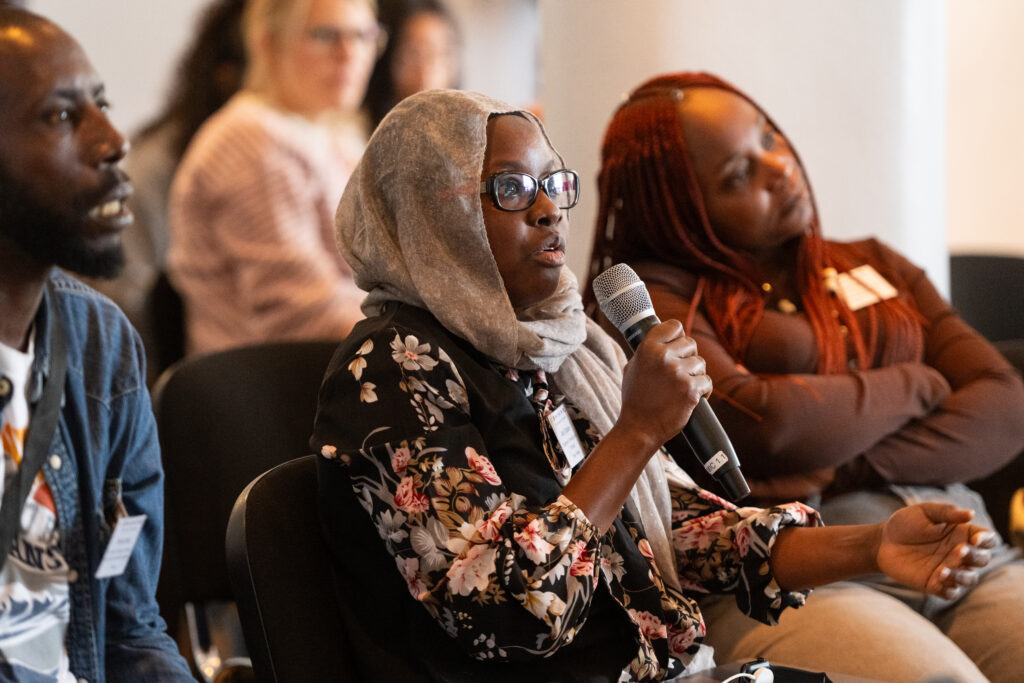
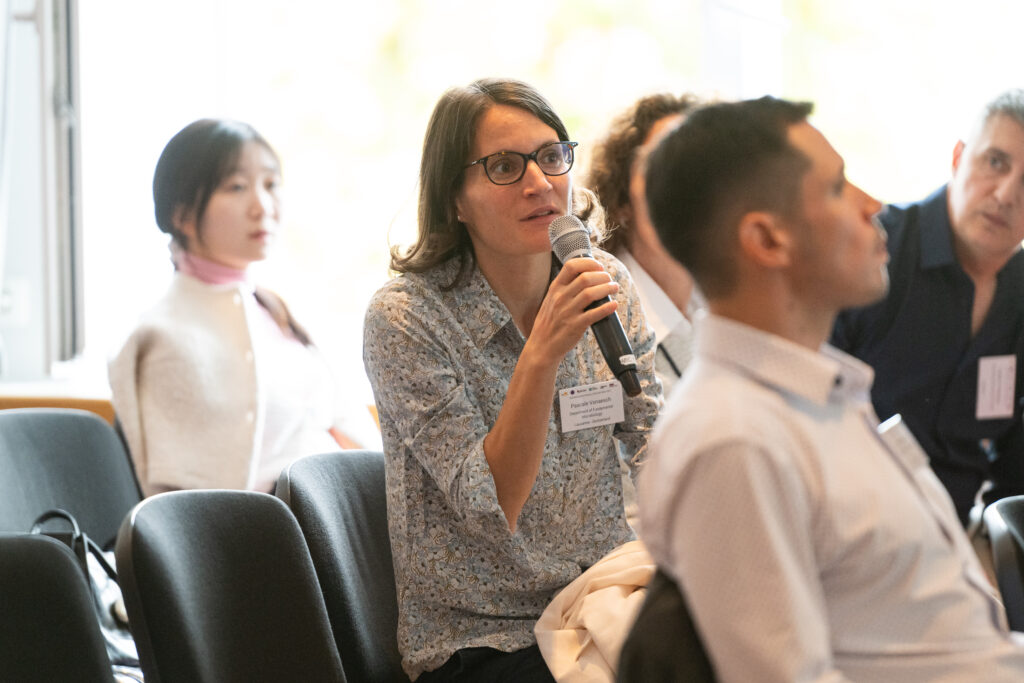
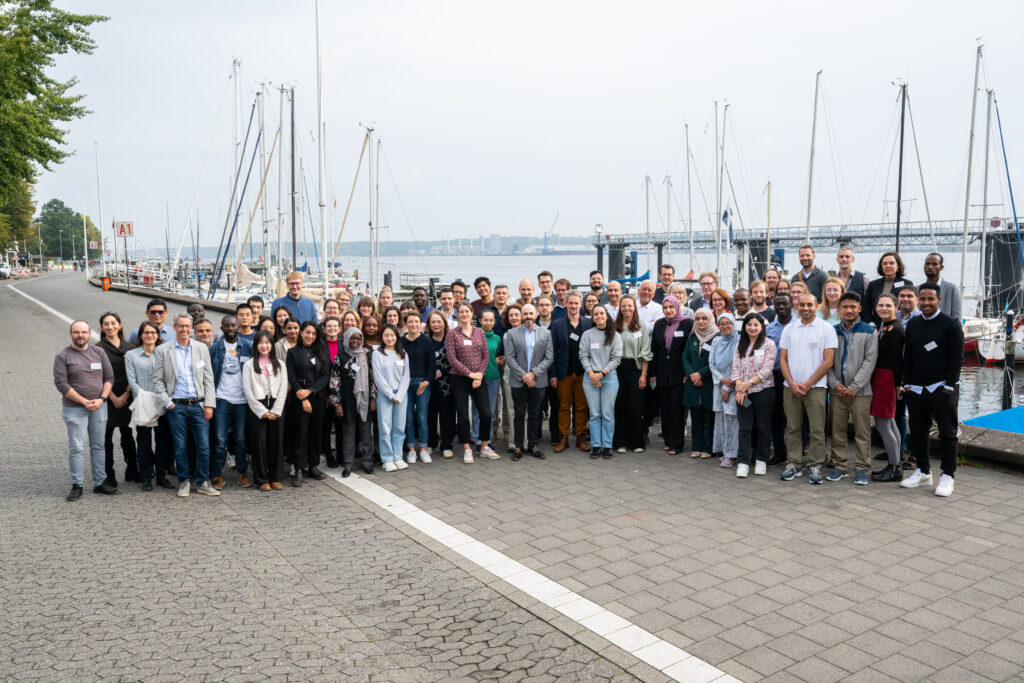
@ Global Microbiome Conservancy / Photos by S. Weimar: KMC–GMbC event series, Kiel (September 2024).
Together, these activities form an integrated capacity-building programme that supports early-career researchers, international collaboration, and equitable access to microbiome science.
Online Learning Resources
To support continued learning and ensure broad access to microbiome training materials, we provide a selection of openly available online resources. These include both in-house and external tools for experimental and computational microbiome research.
Kiel Microbiome Center Workshop Materials
Teaching materials from the Kiel Microbiome Center’s hands-on workshop are available here:
https://ikmb.github.io/nfdi4microbiota_kmc_microbiome_workshop/
MMmicrobiome Lab Groussin/Poyet
Visit our GitHub repository to explore code and resources from the MMmicrobiome Lab.
External Resources
- Microbiome R Tutorials
Tutorials for microbiome data analysis using R.
https://www.yanh.org/2021/01/01/microbiome-r/ - ANF-MetabioDiv Course Material
Training material covering core microbiome analysis techniques.
https://anf-metabiodiv.github.io/course-material/ - Dokdo Documentation
A curated collection of useful information for working with the Dokdo microbiome toolkit.
https://dokdo.readthedocs.io/en/latest/useful_information.html - R for Data Science
A comprehensive guidebook for data analysis and visualization using R.
https://r4ds.had.co.nz/