Secondary coverage by News Desk Editor of The Boca Raton Tribune based on a feature article published in Nature Career Feature.
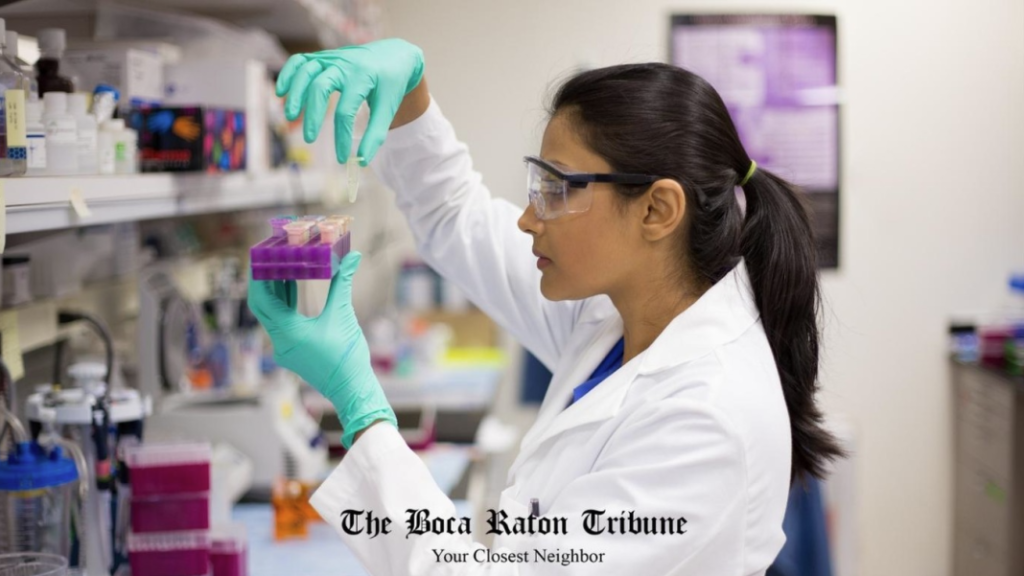
Leading Researchers in Aerospace Medicine and Environmental Microbiology Argue That Urine and Feces Offer Critical Data on Public Health, Infectious Disease, and Personalized Wellness.
Beneath cultural taboos and public distaste, human waste products—urine and feces—are rapidly emerging as invaluable scientific assets, yielding critical data across public health, microbiology, and even sustainable agriculture. What is often dismissed as excretory waste is now viewed by scientists as a “treasure trove” of biological information that can inform personalized medicine and predict epidemics before they surge. The potential of these materials is so great that research biobanks are storing stool samples in specialized freezers with battery backups to ensure their long-term preservation.
The Gut Microbiome as a Health Indicator
The primary focus for fecal research lies in the human gut microbiome, the community of organisms residing in the intestines that serves as a detailed health indicator. The Global Microbiome Conservancy (GMbC), co-founded by Mathieu Groussin, operates a biobank predicated on the idea that stool samples provide an ideal snapshot of this genetic content.
“It’s our best way to interrogate what’s in the gut from healthy people,” said Groussin, adding that while it is “a little bit gross, that’s just our best way to access this incredible and important biodiversity.” Much of the previous research on the human gut microbiome has focused disproportionately on populations of European descent. To address this bias, the GMbC has collected samples from 50 populations spanning 19 countries, including distant locations like Ghana, Finland, and Thailand, often requiring researchers to travel by cars, boats, and even quadbikes to remote sampling sites.
The analysis of these samples extends beyond general health:
- Disease Treatment: Stool samples are critical for the development of faecal microbiota transplants (FMTs), a potentially life-saving process used to treat recurrent Clostridium difficile infections. Gastroenterologists like Josbert Keller, who published early clinical trials on FMT effectiveness, note that the procedure can “really cure a patient” when their own microbiota is disturbed. FMTs are also being investigated as treatments for obesity, Type 2 diabetes, and Parkinson’s disease.
- Diagnostic Tools: The insights derived from stool samples have broad applications, with former microbiologist Bryn Nelson identifying at least 24 fields that draw important information from waste products.
Wastewater and Urine: Public Health and Sustainability
Beyond the biobank, wastewater analysis has proved its value as a public-health tool. Environmental microbiologists, such as Janelle Thompson at Nanyang Technological University in Singapore, sample wastewater to monitor pathogens in the population.
This methodology was crucial during the COVID-19 pandemic. Thompson and her colleagues successfully used wastewater to identify variants of concern for the coronavirus SARS-CoV-2 at campus sites and treatment plants in 2021 and 2022, signaling “minimal silent circulation” long before the variants became dominant. This demonstrates that the waste we release “is really data rich,” as Thompson stated.
Urine, too, is gaining recognition, primarily for its agricultural potential. Amid a global fertilizer shortage, scientists are researching the use of urine due to its nitrogen content. A Stanford University study published in Nature Water created a prototype system to extract nutrients from urine, estimating that the design could generate up to US$4.13 per kilogram of nitrogen recovered. Research also suggests urine-based fertilizer could help conserve water and reduce greenhouse-gas emissions.
Overcoming Cultural Barriers for Scientific Progress
Despite the undeniable scientific value, researchers face a persistent challenge: the deeply rooted cultural taboo surrounding human excrement. This taboo is stronger toward feces than urine, according to Marine Legrand, an anthropologist researching waste recycling. This cultural barrier sometimes affects funding, which is easier to secure for medical applications of feces than for agricultural uses.
To bridge the communication gap, researchers adapt their vocabulary to their audience: they use technical terms like “excreta” with policymakers, straightforward words like “poo and pee” with the public, and humor with children. Liz Terveer, head of the Netherlands Donor Faeces Bank, noted that while humor can connect with the audience, it often makes it difficult to ensure the research is “being taken seriously.”
Ultimately, the consensus among experts is that the scientific potential of these materials far outweighs the “ick” factor. As Nelson said, “The more gross something is, the more potential there is to uncover something new.” Mathilde Poyet concluded that avoiding this research would be a “pity… just because it’s gross,” noting that human waste is simply “biomaterial and that gives us so much information.”
Based on the original article published by Nature, available at: https://www.nature.com/articles/d41586-025-03350-8